How do you select a project and write a problem statement??
Begin your selection process by reviewing your environment
It is important to recognize the environmental factors that will affect your project's success. Think about it from your leadership team's and your customers' perspectives. Where would they have you start? Ask these questions to assess your current environment.
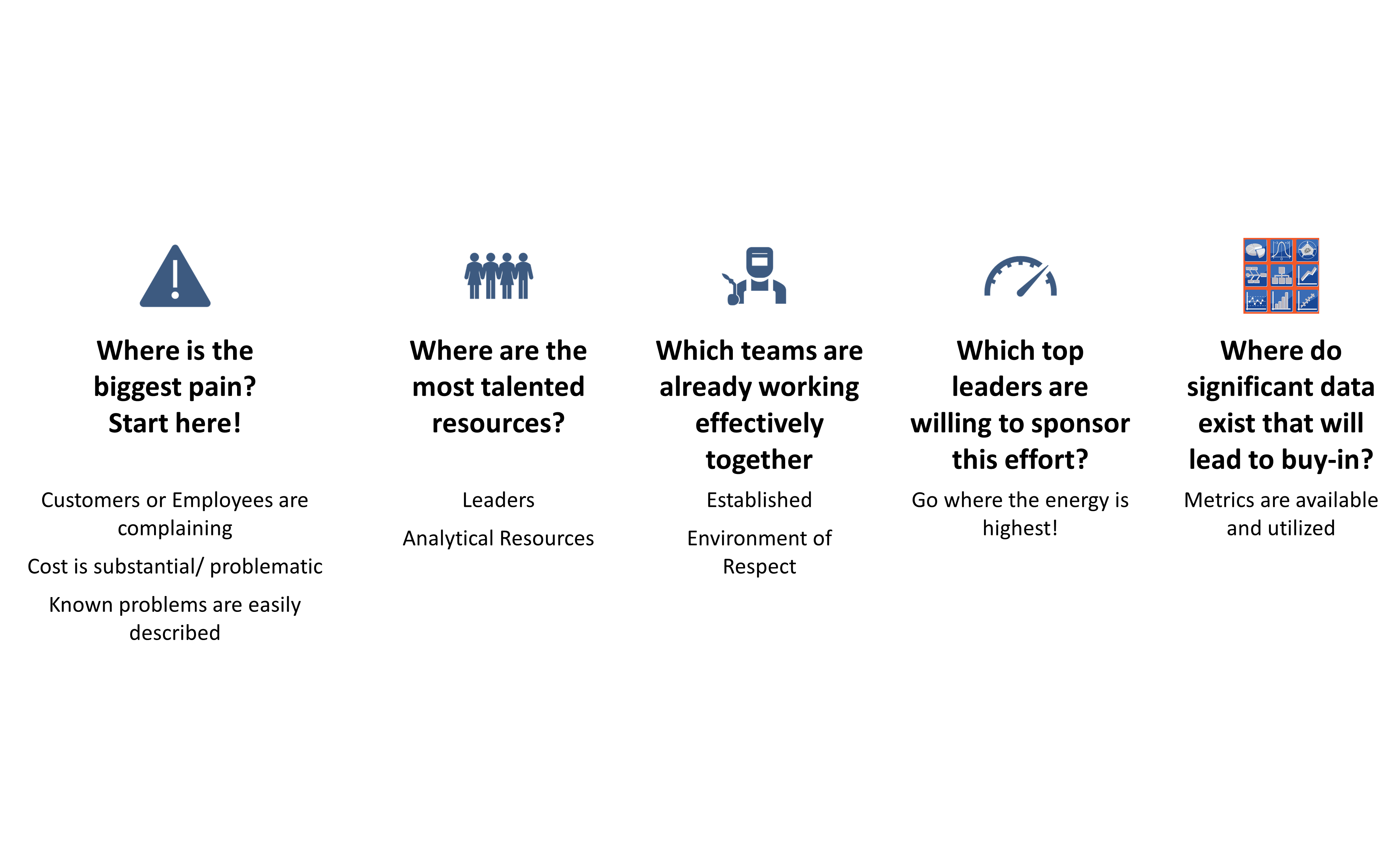
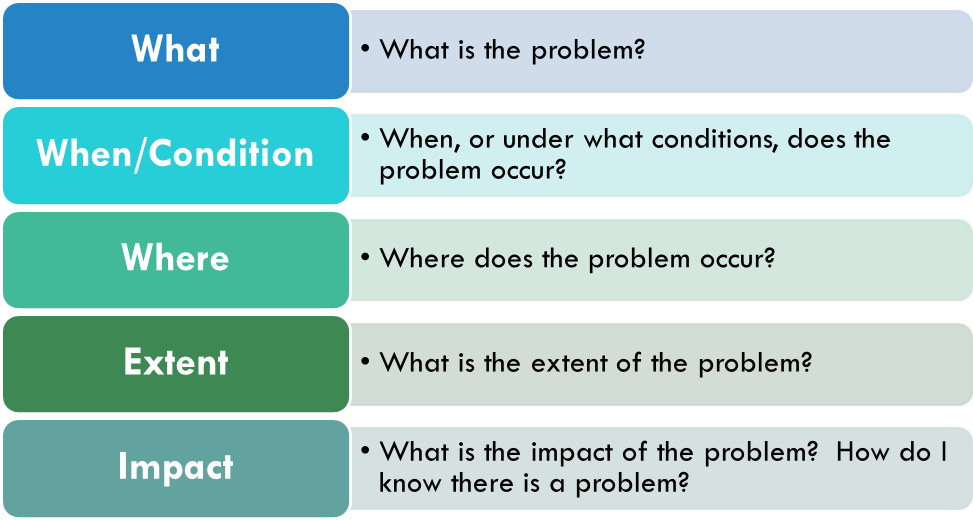
Learn to use the problem statement format to describe the current condition
If there are some obvious opportunities calling out for your attention, start by recognizing the pain the current state is causing you – which is why you’d need to work on a project in the first place.
Use a problem statement to describe the pain of the current state and use data where possible.
Good problem statements stay AWAY from including a potential solution.
Example of a before and after problem statement
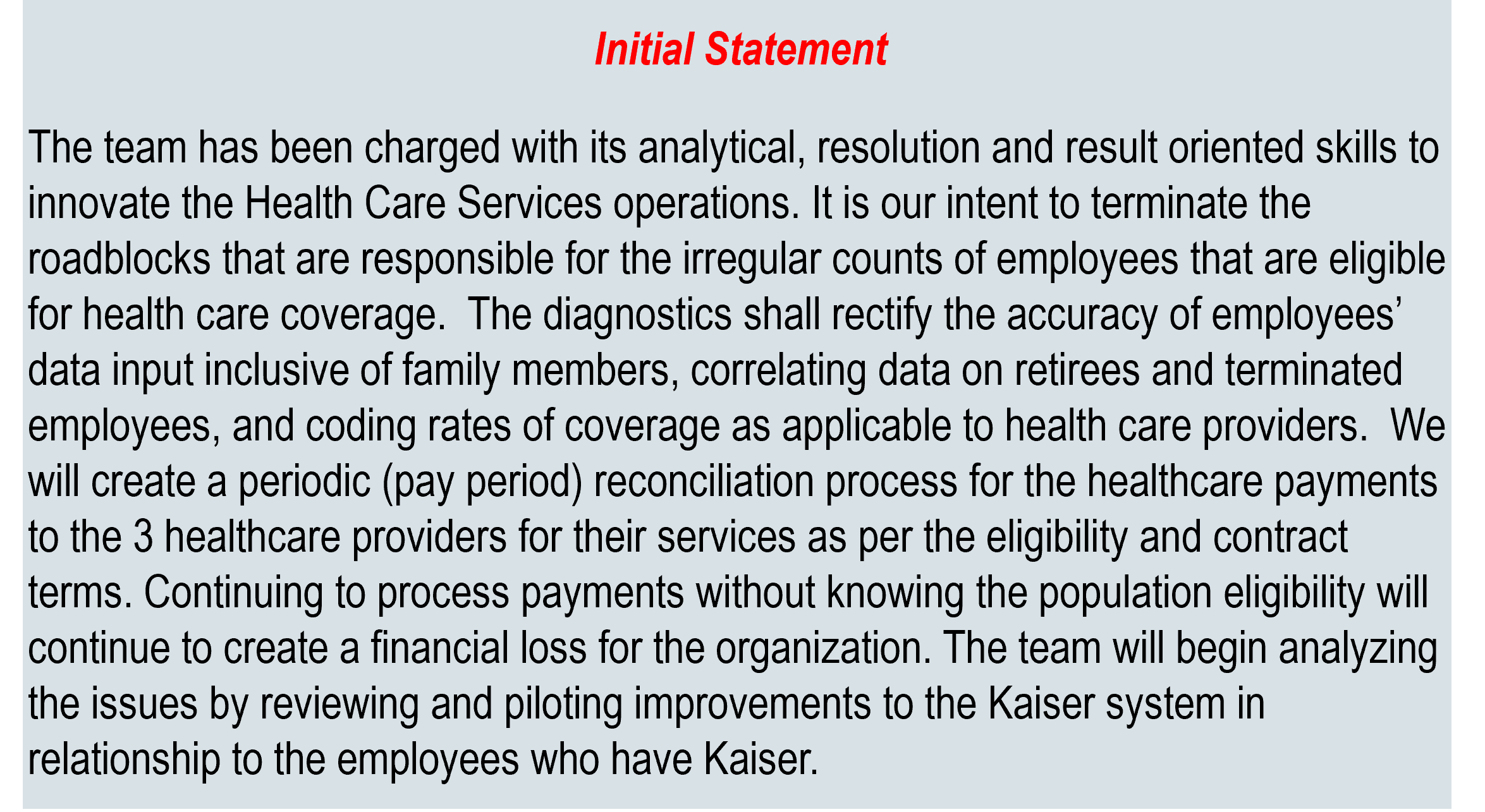
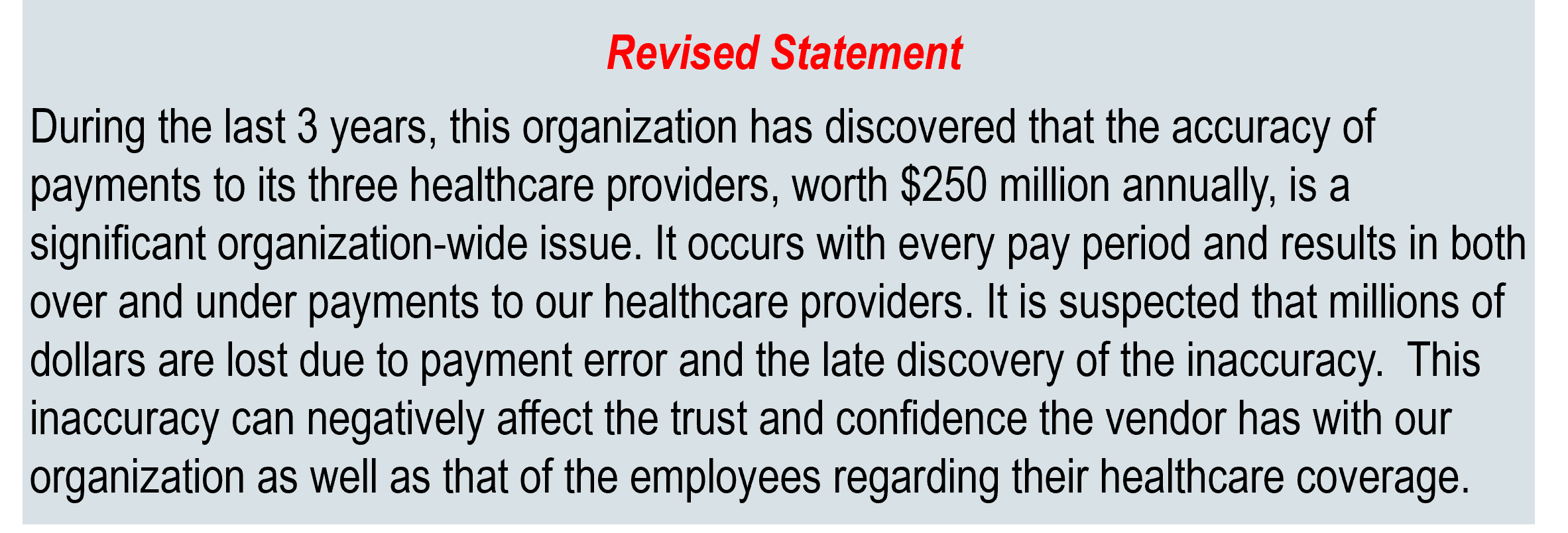
Notice in the revised statement:
- the improved clarity
- focus on the problem (instead of the solution) and
- compelling nature of the impact.
Alternative to Pain Point / Problem Statement
If your project is not a PAIN POINT per se but is selected by the leadership team as something which must be prioritized as a temporary endeavor, think about it from the perspective of the strategic objective.
- Why did the leadership team set this objective?
- What are they trying to solve in the marketplace?
- Why is the current state insufficient?
- What benefit will the organization gain from capitalizing on this opportunity?
Exercise
Take a shot at writing your own pain point or strategic objective and ask these questions before sharing it with potential stakeholders for input:
- Does the statement include the five elements for a good problem statement?
- If using the strategic objective format, is it clear how this project opportunity links to a strategic objective?
- Is it compelling?
- What would you do to improve this problem statement/strategic objective?
Identify the Target Condition which will become the focus of your project
Establishing the vision and next target condition helps scope project effort
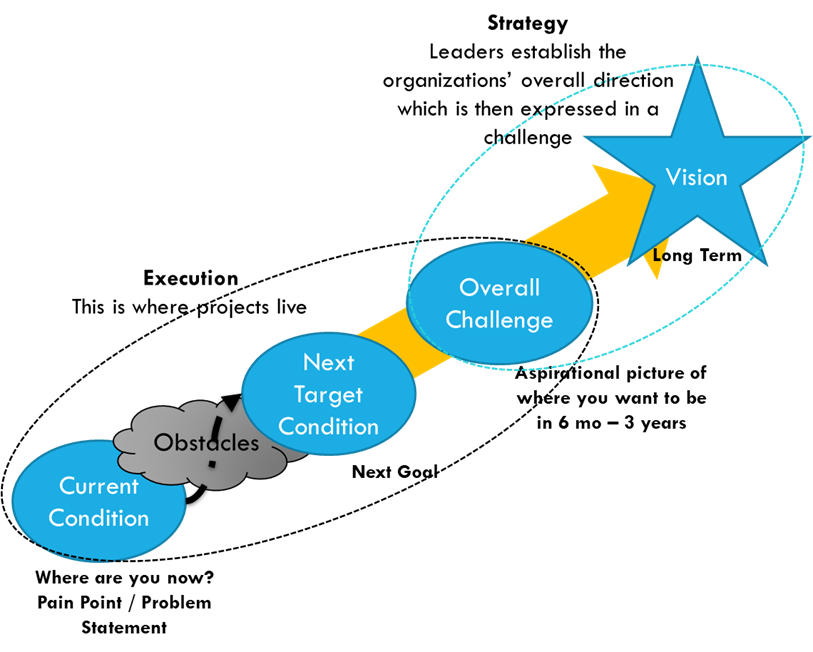
It’s possible that the target condition is too big to attack all in one chunk. Perhaps you’re better off to think about the long-term vision and then drop that back to a challenge and your next target condition.
If leaders are setting the overall direction and vision, or if you have a long-term vision of where the opportunity will take you as an aspiration, it can be helpful to document this. Now you can think about the challenge you’d like to achieve on your way to the long-term vision. This overall challenge will identify the next target condition to achieve on the way towards the overall vision.
In this way, you can still keep the long-term vision in mind but not bite off more than you can chew in one project.
Exercise
Think about a recent project.
- What was the pain-point your project was attempting to solve?
- Was there an overall challenge or long-term vision that applied?
- How did you break up the project to go after the next target condition on your way to achieve the overall challenge?
- If you did not identify the next target condition when you started this project, should you have? How would this have helped your project execution?